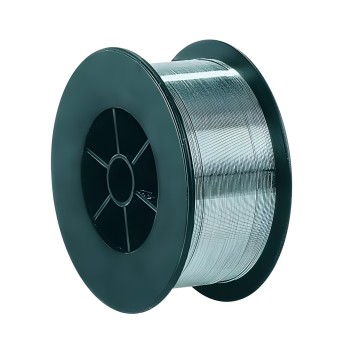
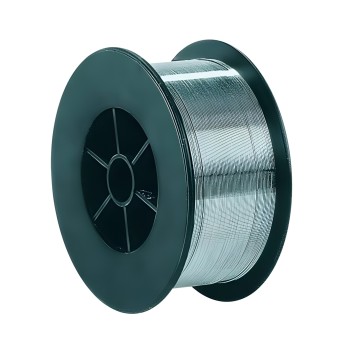
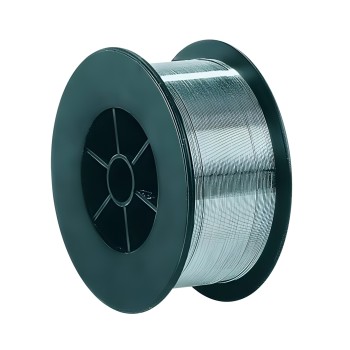
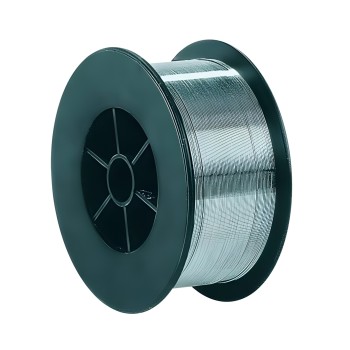
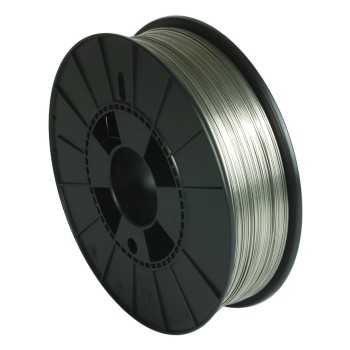
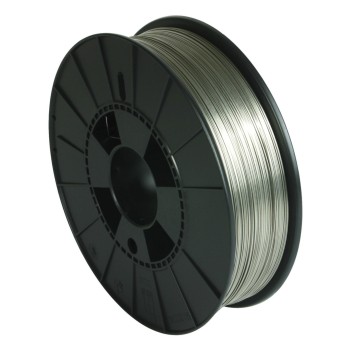
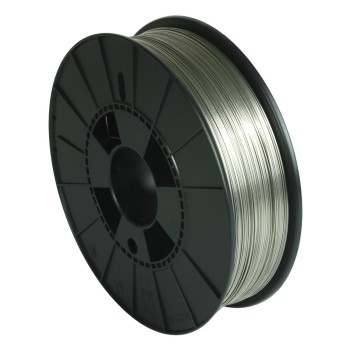
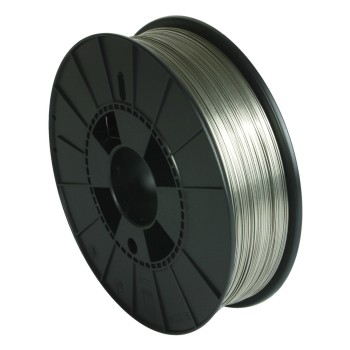
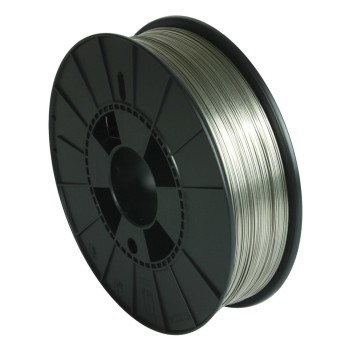
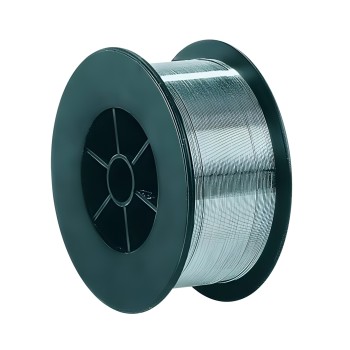
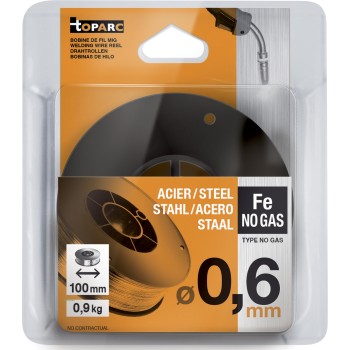
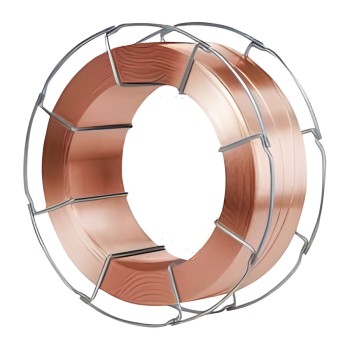
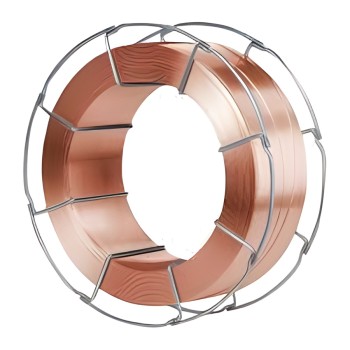
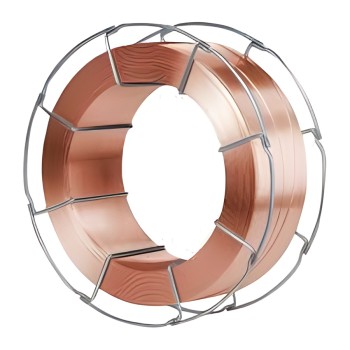
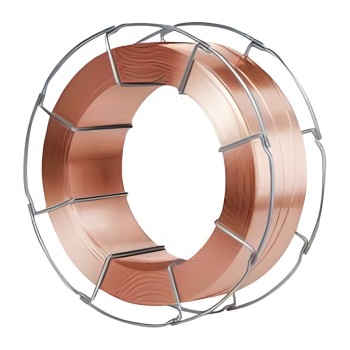
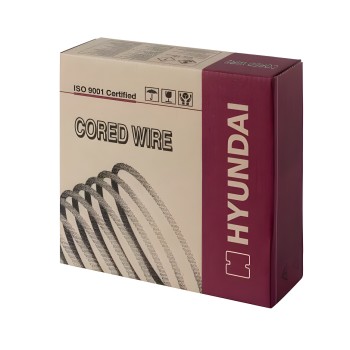
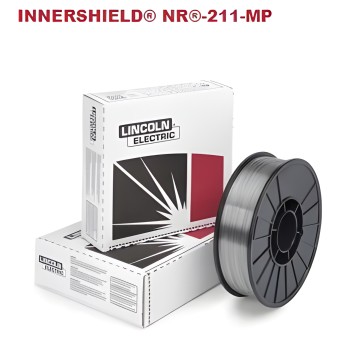
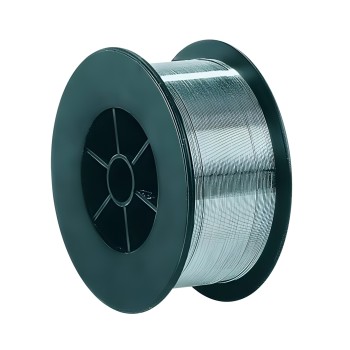
Gasless flux-cored wire allows semi-automatic arc welding without a gas cylinder, both indoors and outdoors. The flux-cored wire spool continuously feeds your MIG welder and generates its own shielding as it melts. Discover our selection of flux-cored wires for steel welding, in the diameters and formats suited to your welding machine.
What is flux-cored wire?
Flux-cored wire is a hollow wire whose core is filled with flux. When it melts under the arc, this flux releases a gas that protects the weld pool and forms an insulating slag. Unlike solid wire, which requires an external shielding gas, gasless flux-cored wire is self-sufficient. This is what makes it possible to weld outdoors without worrying about wind dispersing the gas shield.
Why choose gasless flux-cored wire?
Flux-cored wire welding offers several advantages. It is performed without a gas cylinder, allowing full mobility and lower setup costs. It is wind-resistant, making it ideal for outdoor repairs: gates, fences, agricultural structures. Gasless flux-cored steel wire is also more tolerant of slightly rusty or painted surfaces than solid wire. It is used with a flux-cored wire welder set to negative polarity.
Which diameter to choose?
The diameter of the MIG flux-cored wire must be suited to the metal thickness and the welder's output. 0.8 mm flux-cored wire is suitable for thin sheets and small welders, while larger diameters (0.9; 1.0; 1.2 mm) cover greater thicknesses and more powerful welders. Check compatibility with your wire feeder and rollers. A well-chosen diameter ensures consistent fusion and good penetration.
Flux-cored wire or solid wire?
The two wire families meet distinct needs. Flux-cored wire is used without gas, outdoors, on medium-thickness steel, with a functional result. The solid wire is used with gas, in the workshop, for a cleaner bead on thin sheets and visible parts. Many welders have both depending on the job. For gas welding, also check out our MIG welder with gas section.
Correct welder settings
Achieving a good flux-cored wire weld requires correct settings. Polarity must be negative (torch at the negative pole), unlike solid wire. Then adjust the voltage and wire speed in increments, on a scrap piece of metal, until a steady arc is obtained. Since flux-cored wire is soft, use knurled groove rollers that feed it without crushing it, and a contact tip of the correct diameter.
Slag removal
A key feature of gasless flux-cored wire: it forms a slag that must be removed after each pass using a wire brush and chipping hammer. This cleaning is essential for a sound weld and to prepare the next pass. The process also generates more fumes: make sure to use proper respiratory protection.
Proper spool storage
A flux-cored wire spool must be kept dry: moisture degrades the flux and causes porosity and spatter. Store your spools in their packaging, away from moisture, and install them correctly on the wire feeder to avoid tangles and jams. A properly stored spool retains all its welding qualities.
Arc adjustment and sound
To get the best out of a flux-cored wire spool, welder settings should be dialled in by trial on a scrap piece of metal. Adjust voltage and wire speed until a steady arc is obtained, whose sound resembles a continuous sizzle: this is the sign of a good balance. An arc that "cracks" indicates wire speed is too low; a wire that pushes the torch back signals the opposite. MIG flux-cored wire is welded at negative polarity: check this first if the arc is unstable. Finally, push the torch forward (the "push" technique) to better see the weld pool and distribute heat across the steel.
Our advice
For outdoor repairs and welding of medium-thickness steel, gasless flux-cored wire is the most practical solution: no gas cylinder, wind resistance, tolerance for imperfect surfaces. Choose the diameter suited to your welder (0.8 mm for thin sheets, larger for greater thicknesses) and pay close attention to polarity settings. Browse our selection of flux-cored wires to equip your MIG welder.
Frequently asked questions
What is the difference between flux-cored wire and solid wire?
Flux-cored wire is hollow and filled with flux: it generates its own shielding and welds without gas, outdoors. Solid wire is solid and requires an external shielding gas, in the workshop, for a cleaner bead. Flux-cored wire is more tolerant of rusty or painted surfaces.
Which flux-cored wire diameter to choose?
Depending on the thickness and welder output: 0.8 mm is suitable for thin sheets and small welders; larger diameters (0.9; 1.0; 1.2 mm) cover greater thicknesses and more powerful welders. Check compatibility with your wire feeder and rollers.
Is gas required with flux-cored wire?
No, that is the whole point of flux-cored wire: the flux it contains releases a shielding gas as it melts. No gas cylinder is needed, which allows welding anywhere, including outdoors.
Why is there slag with flux-cored wire?
The flux contained in the flux-cored wire, as it melts, forms a slag that protects the weld pool during cooling. This is normal: it must be removed after each pass with a wire brush and chipping hammer, to obtain a sound weld and prepare the next pass.


 Italy
Italy
 Netherlands
 Croatia
 Denmark
 Finland
 Greece
 Ireland
 Portugal
 Sweden
 Norway
 Bulgaria
 Estonia
 Latvia
 Lithuania
 Poland
 Czech Republic
 Romania
 Slovakia
 Slovenia
 Hungary
 Spain
Spain



 2-year warranty