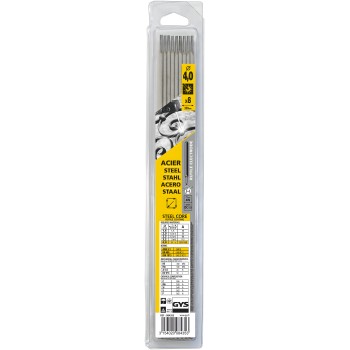
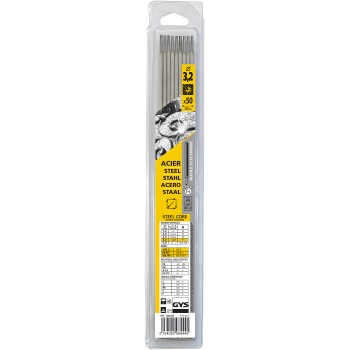
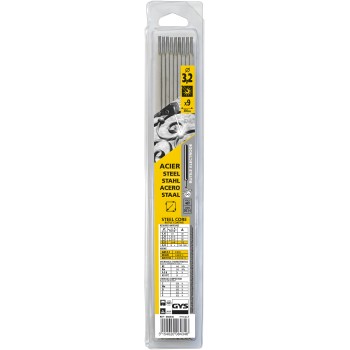
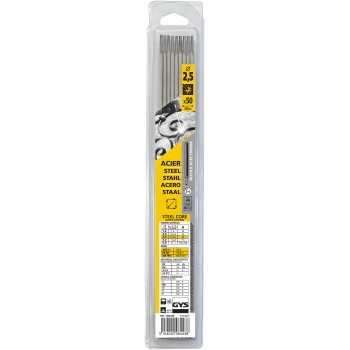
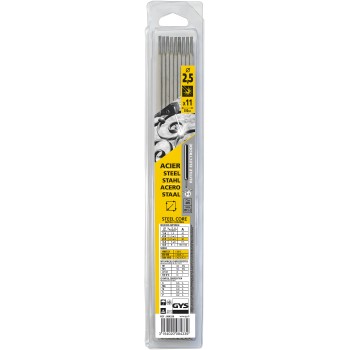
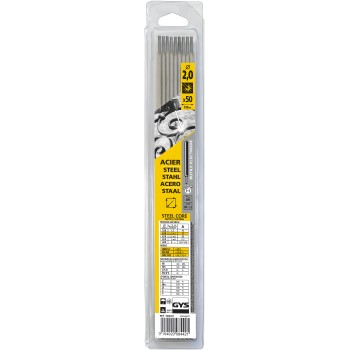
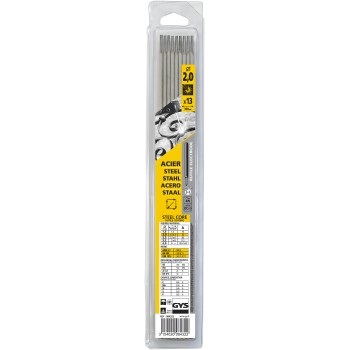
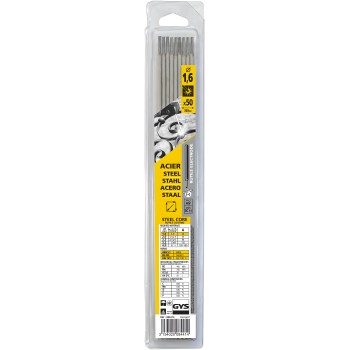
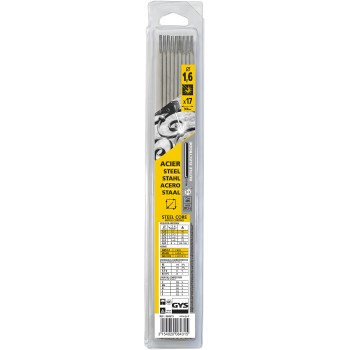
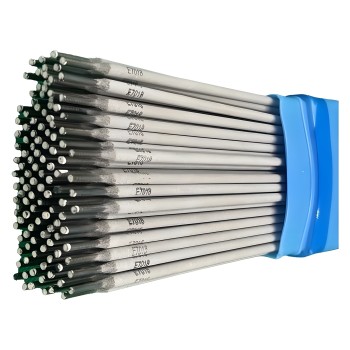
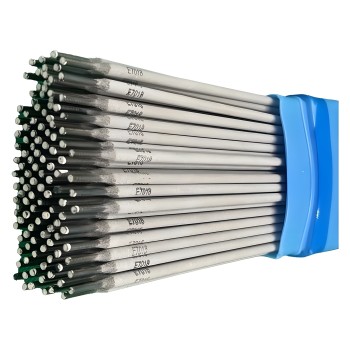
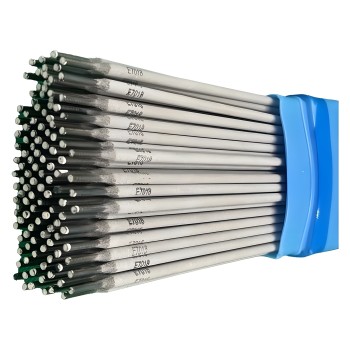
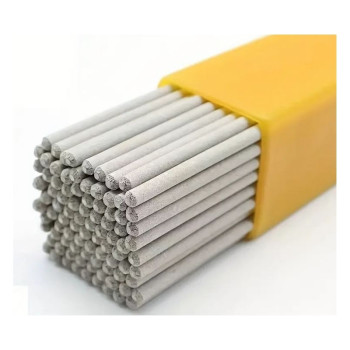
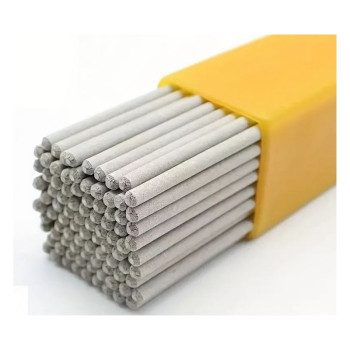
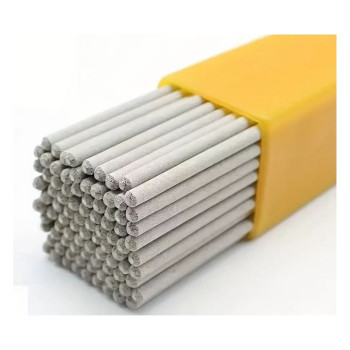
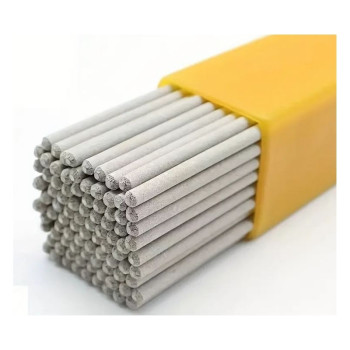
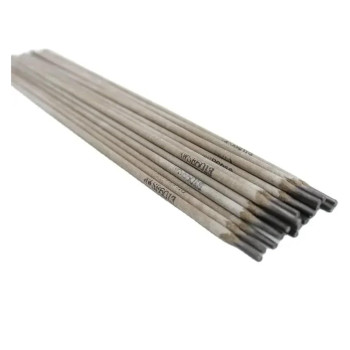
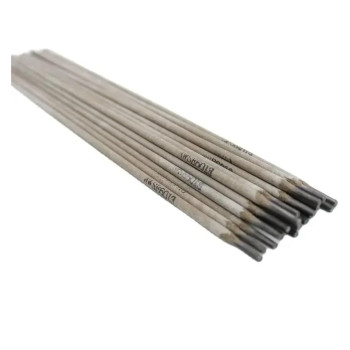
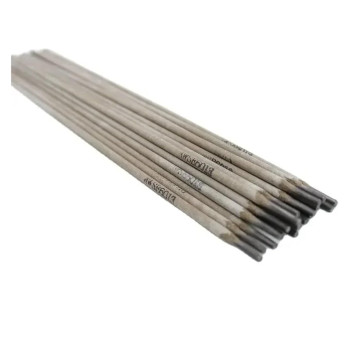
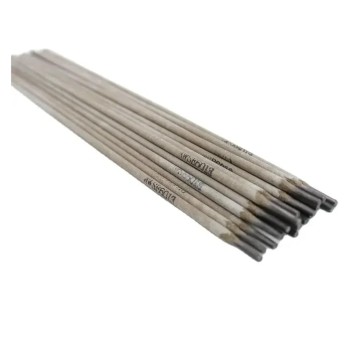
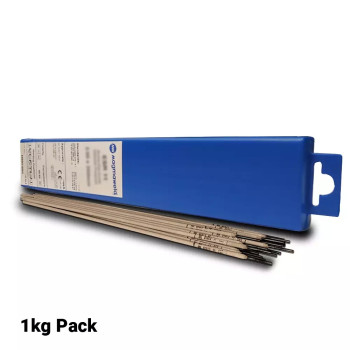
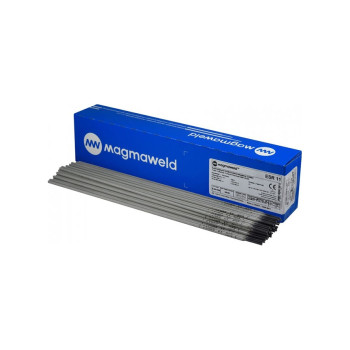
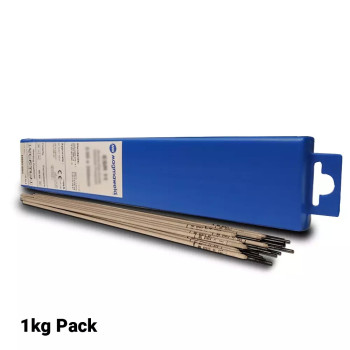
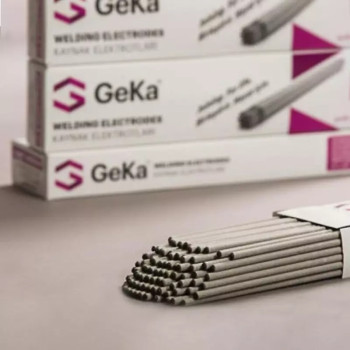
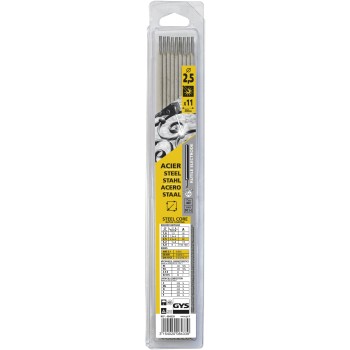
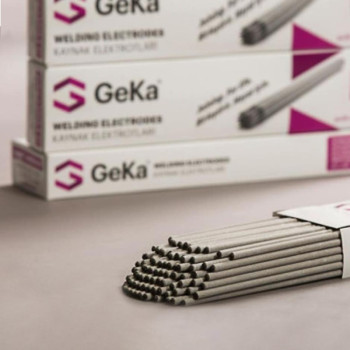
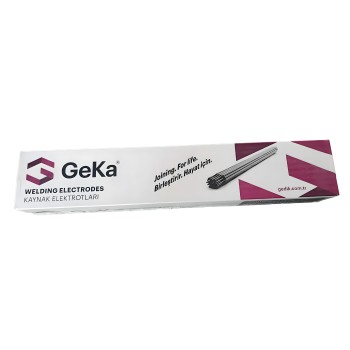
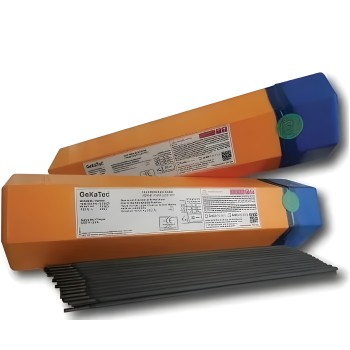
The rutile welding rod is the most widely used coated electrode for arc (MMA) steel welding. Easy to strike, forgiving and economical, the rutile electrode is the first choice for repair work, ironwork and learning. Discover our selection of steel welding rods in the diameters suited to your work.
What is a rutile electrode?
A rutile electrode is a steel rod coated with a rutile-rich coating (titanium oxide). As it melts, this coating generates a shielding gas and a slag that isolate the weld pool. Rutile offers easy striking, a smooth and stable arc, and a clean bead: this is what makes it the most versatile welding rod for common steel.
Rutile or basic?
There are two main families of electrodes for steel. The rutile rod is easy to use, ideal for common work and beginners, with slag that detaches cleanly. The basic electrode provides more resistant and tough welds, suited to loaded structures, but is more difficult to strike and more sensitive to moisture. For general steel welding, rutile is more than sufficient.
The right diameter
The diameter of the welding rod is chosen according to the thickness of the workpiece and the machine's amperage. Common diameters (2.0; 2.5; 3.2 mm) cover most work. A useful rule of thumb: approximately 30 to 40 amperes per tenth of a millimetre of diameter. A steel rod too large for a low-power machine is difficult to strike; too thin, it melts too quickly.
How to weld properly with an electrode
The success of MMA steel welding relies on a few principles: clean the workpiece, adjust the amperage according to the diameter, strike the electrode by scratching it like a match, then maintain a short and regular arc length. Work with a MMA welding machine and remove the slag after each pass with a brush and chipping hammer.
Storing your rods
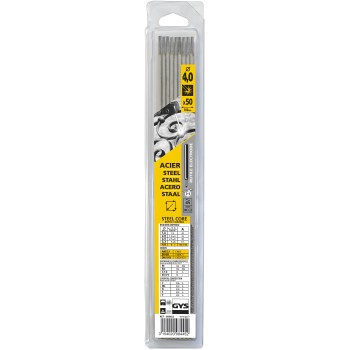
Like all coated electrodes, the rutile rod is sensitive to moisture, which degrades the coating and causes porosity and arc instability. Store your rods in their original packaging, in a dry place. Electrodes in blister packs or in cases facilitate good storage depending on your consumption.
Beyond common steel
For other metals, there are specific electrodes: stainless steel rod for stainless steel, cast iron rod with a nickel core for cast iron. The principle remains the same, only the grade changes. For precision and finish, one turns to TIG and its filler metal.
Common defects and how to avoid them
With the rutile electrode, a few defects recur often. Porosity generally comes from a damp rod or a dirty workpiece: keep your electrodes dry and clean the metal. Electrode sticking indicates too low an amperage or too short an arc; excessive spatter indicates too high an amperage. By adjusting the setting on a scrap piece of metal and maintaining a regular arc length, these problems can be quickly corrected.
Preparing your assemblies properly
Successful steel welding starts with preparation. Clean the workpieces (rust, paint, grease), and for thick sections, chamfer the edges to ensure good penetration. Good clamping on a welding table maintains the geometry during cooling and limits distortion. These simple steps, too often overlooked, determine the strength of the weld bead as much as the choice of the welding rod itself. A quality rutile electrode on well-prepared workpieces delivers reliable and consistent results.
Why rutile remains essential
While other coatings exist, the rutile rod remains the first choice for common steel due to its ease of use. It forgives small imperfections, strikes without difficulty and produces a clean bead with slag that is easy to remove. For repair work, ironwork and learning electrode welding, it is the reference rod, the one to start with in full confidence.
Our advice
For common steel welding, the rutile welding rod is the ideal choice: easy, economical and versatile. Choose the right diameter for your machine and workpiece thickness, keep your electrodes dry and pay attention to your arc length. Browse our selection of rutile electrodes and steel rods for all your arc welding work.
Frequently asked questions
What is a rutile electrode?
It is a steel rod coated with a rutile-rich coating (titanium oxide). As it melts, the coating generates a shielding gas and a slag that isolate the weld pool. Rutile offers easy striking and a stable arc: it is the most versatile electrode for steel.
What is the difference between a rutile and a basic electrode?
Rutile is easy to use, ideal for common work and beginners. Basic provides more resistant welds for loaded structures, but is more difficult to strike and more sensitive to moisture.
Which welding rod diameter should I choose?
According to the thickness and the machine's amperage: common diameters are 2.0; 2.5 and 3.2 mm. A useful rule of thumb: approximately 30 to 40 amperes per tenth of a millimetre of diameter. A rod too large for a low-power machine is difficult to strike.
How should welding rods be stored?
In a dry place, in their original packaging: moisture degrades the coating and causes porosity and arc instability. Blister pack or case packaging facilitates good storage depending on the quantity used.
What is the difference between a basic and rutile electrode?
A rutile electrode is easy to strike and suitable for common work. A basic electrode produces a more resistant weld but requires a suitable machine and dry storage.
Which rod to use for welding stainless steel?
To weld stainless steel, use a stainless steel electrode compatible with the grade to be assembled, for example 308L or 316L depending on the material. Avoid steel consumables that contaminate stainless steel.


 Italy
Italy
 Netherlands
 Croatia
 Denmark
 Finland
 Greece
 Ireland
 Portugal
 Sweden
 Norway
 Bulgaria
 Estonia
 Latvia
 Lithuania
 Poland
 Czech Republic
 Romania
 Slovakia
 Slovenia
 Hungary
 Spain
Spain



 2-year warranty